
Aesthetics · 9 min read
You Don’t Need More Filler: 5 Treatments We Might Recommend Instead
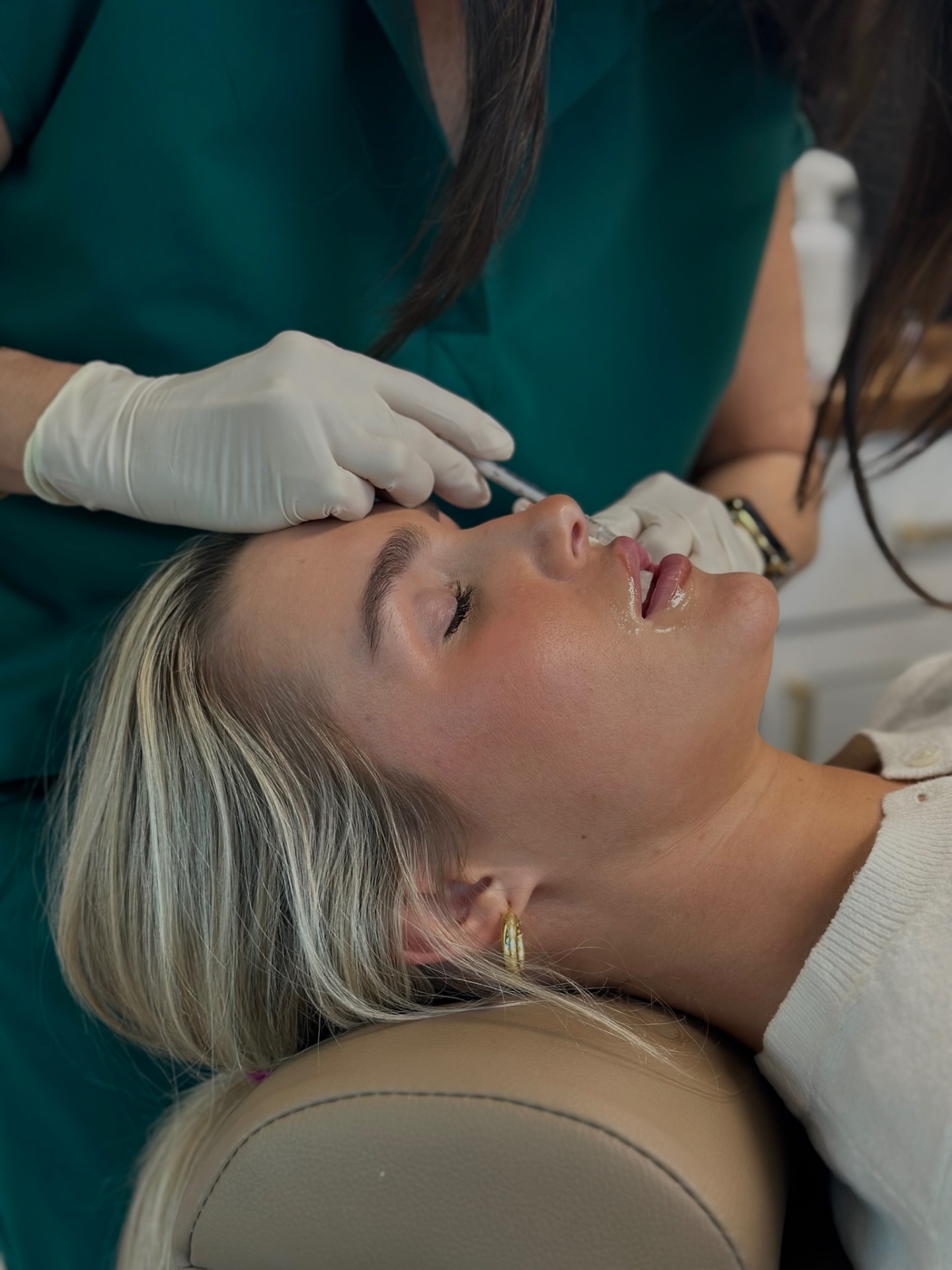
1. Lip blushing when the issue is color, not size
If you keep asking for lip filler because your lips look washed out, uneven, or poorly defined, the missing element may be pigment rather than volume. Lip blushing is a cosmetic tattoo technique that deposits customized color into the lips to enhance the border, improve the appearance of symmetry, and create a more consistent natural tint.
Lip blushing is now available at our Bee Cave location
Follow along on Instagram to see the latest work.
Follow @agataesthetics on InstagramIt may be worth discussing when your goals include:
- A more visible lip border without additional projection
- Soft correction of uneven natural lip color
- A healthy-looking tint that reduces reliance on daily lip products
- Visual definition while maintaining your existing lip shape
Lip blushing does not physically enlarge the lips and should not be used to disguise significant asymmetry that needs medical evaluation. The healed color is softer than it appears immediately after treatment, and more than one session may be needed. A consultation should cover pigment choice, healing, cold-sore history, medications, prior filler, and whether permanent makeup is appropriate for you.
2. Topical GHK-Cu when skin quality needs support
GHK-Cu is a naturally occurring copper-binding tripeptide used in topical skin and scalp formulations. In skincare, it is discussed for its role in supporting the skin environment and normal repair processes. It is not a substitute for volume replacement, and it will not reshape facial anatomy. That is precisely why it can make more sense when the concern is overall skin quality rather than facial structure.
A topical GHK-Cu product may fit into a broader plan for patients focused on:
- Supporting a smoother, healthier-looking skin surface
- Maintaining skin after an in-office procedure
- Building a consistent home regimen rather than adding volume
- Addressing both skin and scalp goals with provider guidance
Expectations matter. Cosmetic GHK-Cu products are not FDA-approved drugs for reversing aging, rebuilding facial volume, or treating disease. Product quality, formulation, consistency, and the rest of your routine all matter. Retinoids, sunscreen, antioxidants, and professionally selected treatments may have a stronger evidence base for a specific concern. Your provider can help decide where GHK-Cu belongs (if anywhere) in your plan.
For more context on copper peptide scalp products, read our GHK-Cu and hair treatment guide.
3. Subcision When the Problem Is Under the Acne Scar
Some acne scars aren't simply areas that need to be “filled.” They're actually tethered underneath the skin.
Fibrous bands can pull certain depressed acne scars downward, creating an uneven or indented appearance at the surface. Subcision is a clinician-performed procedure designed to release those bands, allowing the scar to lift and helping improve the overall contours and smoothness of the skin.
We may discuss subcision if:
- You have rolling or tethered acne scars
- Certain scars appear pulled downward or indented
- Acne scarring is creating uneven skin contours
- Your scars create noticeable shadows in different lighting
- Surface treatments alone haven't adequately addressed them
- You need a more customized acne-scar treatment plan
Simply putting filler over a tethered scar may not address what's actually pulling the skin down. By releasing the scar tissue underneath, subcision can help soften depressions and create a smoother, more even-looking skin surface.
Not every acne scar is appropriate for subcision. Ice-pick scars, active acne, pigment concerns, and raised scars may require different approaches. Depending on your skin and scar type, we may recommend subcision, SkinPen microneedling, another modality, or a combination treatment plan.
4. Sculptra when the goal is gradual collagen support
Sculptra is an injectable collagen biostimulator made with poly-L-lactic acid. Unlike traditional hyaluronic acid filler, which provides immediate gel-based volume, Sculptra is used to stimulate your own collagen response over time.
We may discuss Sculptra when facial aging looks more like generalized thinning and loss of support than one isolated fold that needs to be filled. It can be considered for areas such as the temples, cheeks, and lower face when a patient wants gradual, subtle change.
Sculptra may be a better conversation when you want:
- Progressive improvement rather than an immediate filled look
- Broader collagen support across an area
- A long-term plan focused on structure and skin firmness
- Results that develop over weeks to months
Sculptra is still an injectable medical treatment; it is not automatically safer or better than filler, and it is not appropriate for every face or every area. Results are not immediate, multiple sessions may be recommended, and post-treatment instructions matter. Only a trained medical provider can determine candidacy.
5. A lip flip when the upper lip hides when you smile
Sometimes the concern is not volume at all. If your upper lip rolls inward or disappears when you smile, a lip flip may be the simpler answer. The treatment uses a small amount of neuromodulator, such as Botox, placed just above the upper lip to relax the muscle that pulls the lip inward. The lip rolls slightly outward, so more of your existing lip shows without adding any product to the lip itself.
A lip flip may be worth discussing when:
- Your upper lip looks noticeably thinner when you smile than at rest
- You want a subtle change, not added volume or projection
- You want to preview a fuller-looking lip before deciding about filler
Results appear within a few days and typically last about six to eight weeks, a shorter window than filler. Because the dose is small, the treatment uses only a few units. Temporary changes in how you speak, drink through a straw, or purse your lips are possible and usually mild. Patients with very weak lip muscles or true volume loss may see little difference, so an in-person assessment of your lip anatomy and muscle movement is essential before treatment.
So when might filler still be the right treatment?
This is not an anti-filler article. It is an argument for better diagnosis before treatment. Filler may still be appropriate when there is true volume loss, a structural imbalance, a contour goal, or a feature that can be safely refined with a conservative amount of the right product.
Examples may include:
- Restoring support in carefully selected areas of the midface
- Balancing the chin or jawline after an anatomy assessment
- Refining lip proportion when volume, not pigment: is the goal
- Replacing age-related volume loss with a measured, long-term plan
The key is that the treatment should match the tissue and the goal. Sometimes that means filler. Sometimes it means dissolving or waiting. Sometimes it means treating the skin, releasing a scar, restoring pigment, or stimulating collagen instead.
What happens at an anatomy-first consultation?
Bring photos of yourself from several years ago if your goal is restoration. Tell us what bothers you in your own words rather than naming a procedure. We will review your medical history, previous treatments, timing, budget, tolerance for downtime, and the result you want to avoid as carefully as the result you want.
At Body Tonic RX, treatment plans are individualized. A provider may recommend one treatment, a staged combination, skincare first, or no treatment at all. Lip blushing is now available at Bee Cave; medical aesthetic consultations and other services are offered based on provider availability and candidacy.
Book a consultation to find out which approach actually matches your concern.
Frequently asked questions
How do I know if I have too much filler?
Possible signs include facial proportions that feel heavier than intended, persistent puffiness, an over-projected feature, or filler that no longer supports the original goal. Only an in-person assessment can distinguish excess product from swelling, migration, anatomy, or normal facial change.
Can skin treatments replace dermal filler?
They can address concerns filler cannot, including uneven texture, acne scars, enlarged-looking pores, and some fine lines. They do not create the same structural volume as filler, so the right choice depends on what is causing the concern.
Is Sculptra a filler?
Sculptra is a collagen biostimulator rather than a traditional hyaluronic acid filler. It is injected, but its primary purpose is to stimulate gradual collagen production instead of creating immediate gel-based volume.
Does subcision work for every acne scar?
No. Subcision is generally considered for tethered or rolling acne scars. Ice-pick scars, pigment changes, active acne, and other scar patterns may need a different treatment or a combination plan.
Where is lip blushing available at Body Tonic RX?
Lip blushing is now available at our Bee Cave location. A consultation is used to discuss color, shape, candidacy, healing, and whether pigment or volume is the concern you want to address.
What is a lip flip and how is it different from filler?
A lip flip uses a small amount of neuromodulator above the upper lip to relax the muscle that pulls the lip inward when you smile. It reveals more of your existing lip rather than adding volume, and results typically last about six to eight weeks.
Can these treatments be combined with filler?
Sometimes. A staged plan may use different treatments for structure, skin quality, scars, or pigment. Your provider should determine the sequence and timing based on your anatomy, treatment history, and goals.
Sometimes the most honest recommendation at an aesthetic consultation is: you do not need more filler.
Dermal filler can be an excellent tool when the goal is to restore true volume loss, refine proportion, or add carefully placed structural support. But it cannot correct every concern, and adding volume to a problem caused by pigment, texture, muscle movement, tethered scars, or declining collagen may leave the face looking heavier without addressing what brought you in.
At Body Tonic RX, our goal is not to sell a syringe. It is to identify why something looks different and choose the most conservative treatment that fits your anatomy, skin, timeline, and preferences. These are five alternatives we may discuss when more hyaluronic acid filler is not the best next step.
First: why “more volume” is not always the answer
A face changes on several levels at once. Bone support shifts, fat pads change, collagen declines, skin becomes thinner, repeated expression creates lines, and sun exposure affects tone and texture. Filler addresses only part of that picture.
Before recommending treatment, a thoughtful provider should ask:
- Is this a volume concern? Hollow temples or proportion changes may benefit from structural support.
- Is it a skin-quality concern? Crepey texture, pores, acne scars, and sun damage usually need a skin-focused treatment.
- Is it a pigment concern? A pale or undefined lip border is different from a lip that lacks volume.
- Is the skin tethered? Depressed rolling acne scars may be anchored below the surface.
- Is the goal gradual rejuvenation? Collagen stimulation may create a more natural progression than immediate added volume.
The answer can also be “do nothing right now.” Good aesthetic care includes knowing when to pause, allow a previous treatment to settle, or protect a result with skincare rather than layering on another procedure.
Medically reviewed

Reviewed by
Michelle Sterniczuk, FNP-C
Nurse Practitioner · Aesthetics & Functional Medicine
Clinical review last updated September 22, 2026
View credentials →All clinical content on Body Tonic RX is reviewed by a licensed U.S. nurse practitioner practicing under the medical direction of an independently licensed supervising physician. Our providers are trained in functional medicine, hormone optimization, peptide therapy, and metabolic health. This review confirms clinical accuracy at the time of publication; medical guidance evolves, always confirm current recommendations with your own provider.
Anatomy first
Book the conversation, not the syringe.
Tell us what you want to improve. We’ll help determine whether filler, one of these alternatives, or no treatment is the right next step.
Book a consultation